The Water Remembers: My Indigenous Family's Fight to Save a River and a Way of Life
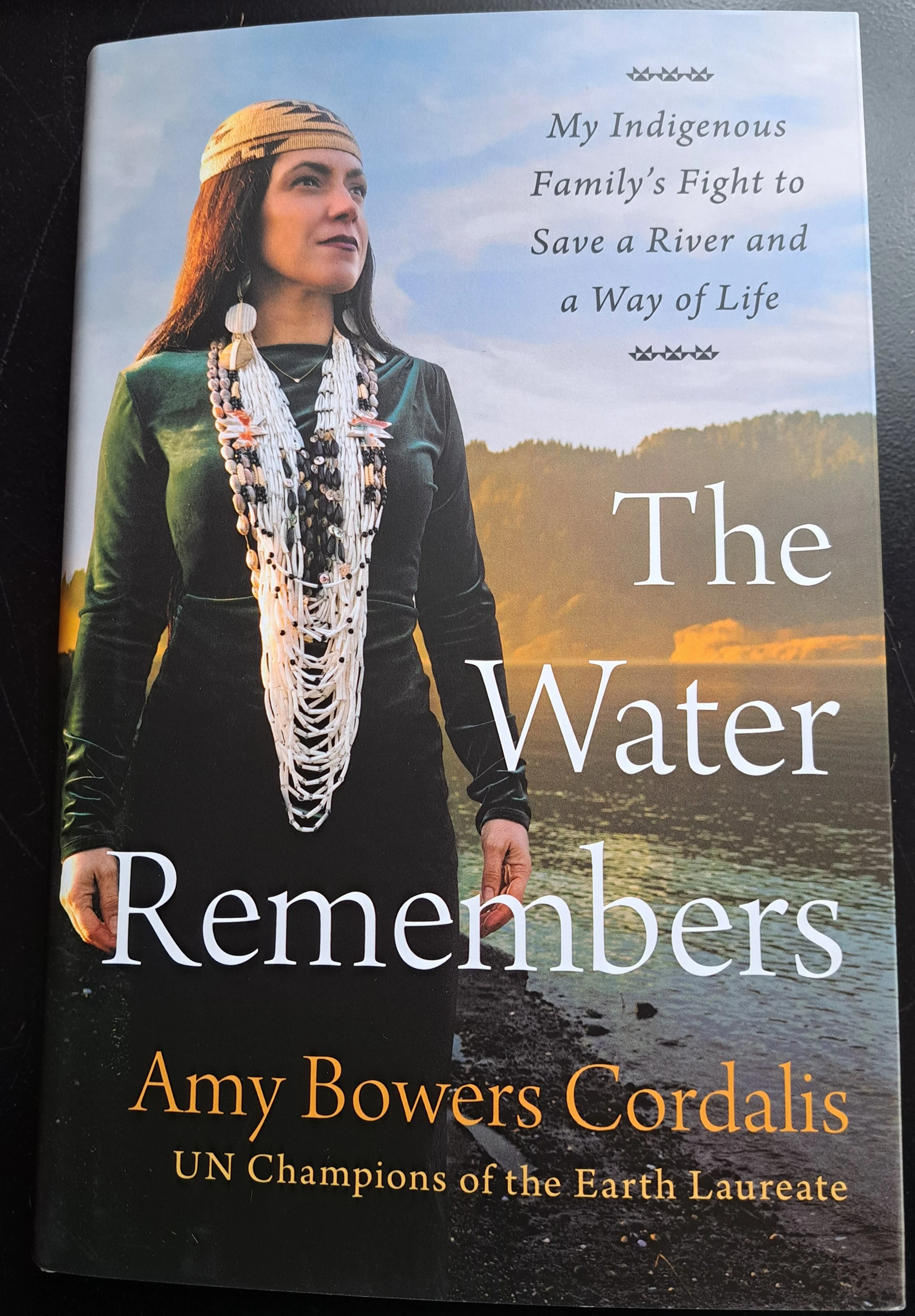
The Water Remembers: My Indigenous Family's Fight to Save a River and a Way of Life
Newly published and just arrived at the Historical Society bookstore is The Water Remembers by Amy Bowers Cordalis. A story long in the making, it reaches us in a time of remarkable relevance -- a time of growing environmental awareness and conflict.
Cordalis, a Yurok attorney and generations-deep environmental activist, is uniquely able to tell this story. A blend of compelling first-person narrative, cultural foundations, plus family and local history, the book takes us on a revealing adventure through decades of tribal and family interaction with traditional beliefs, the natural world and imposed government. In gradual swings between forced cultural assimilation and determined recapturing of traditions, we are shown decades of family and tribal experiences.
With the Klamath River and cultural role of salmon central to the story, readers experience early cultural conflicts, the Salmon Wars of the 1970s, massive fish kills, battles over water rights, and the triumphant campaign for dam removal.
Woven throughout is the personal story of the author. From a culturally committed and courageous family with a childhood spent fishing and playing on the river, we see a woman galvanized by environmental injustice into becoming a lawyer and fighting for her people by spearheading the dam removal battle and ultimately being awarded the United Nations' highest environmental honor.
The publishing of this book in 2025 helps fill a gap in all bookshelf coverage of the local Native American story. And it comes at a time when this aspect of our local history is not fully resolved. In our on-going cultural and environmental story, this book writes an important chapter.
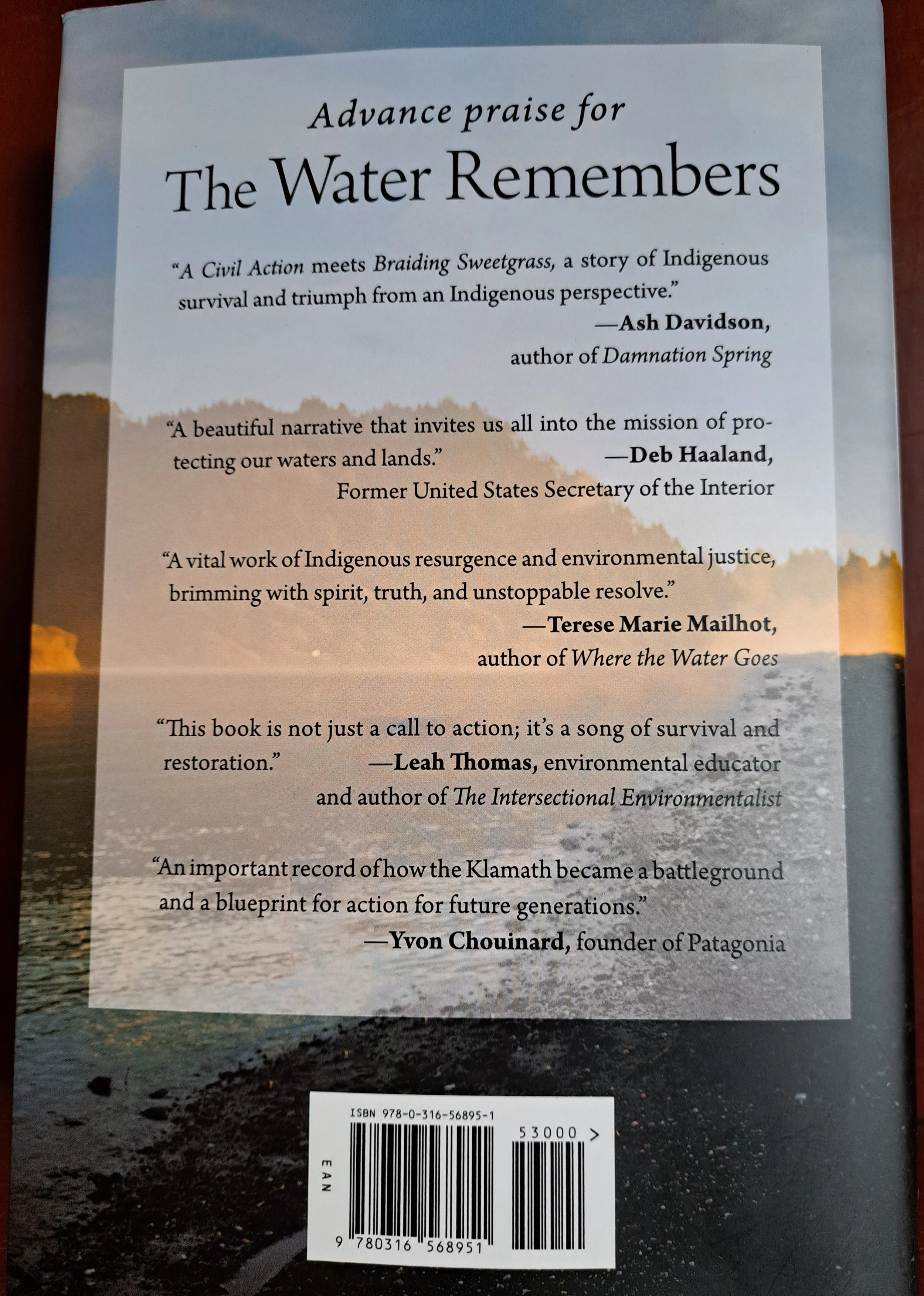
Several sentences in the book's dust-jacket blurb capture the book's emotional and factual content. The Water Remembers is a testament to the enduring power of indigenous knowledge, family legacy and the determination to ensure that future generations remember what it means to be in balance with the earth. At its core is a guiding truth: the earth is not a resource -- it's a relative."
See an interview with the author here.